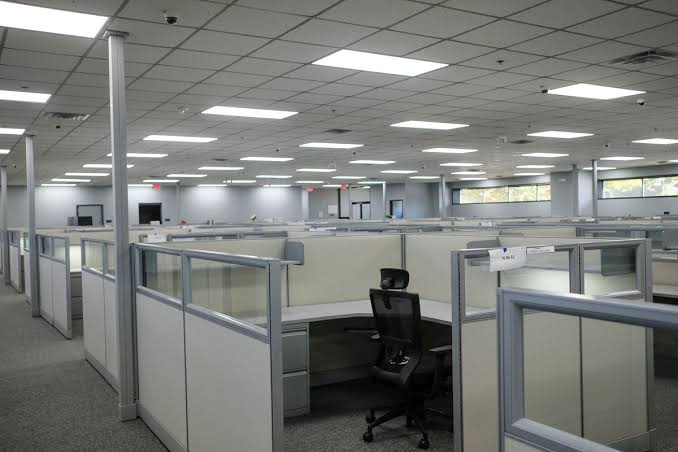
 People have spent a lot of time brainstorming various “office features” that they think will improve team performance. Some examples:
- Gourmet Coffee Stations
- Ping Pong Tables
- Meditation Rooms
- Free Food
- Cubicles
- No Cubicles
- Remote Work
- No Remote Work
- Food Truck Thursday
And I am sure that every reader can name a half-dozen more!
Do any of these work? Well – maybe some, for a while, in some places.
But now we have new research from Harvard Business Review that tells us of one Office Design Feature that actually makes a difference. Based on a study of more than 6,000 knowledge workers, the data revealed that the single factor consistently distinguishing elite “superteams” from average ones is a quiet place to do focused work. These teams have access to an environment where they could concentrate without interruption.
Interestingly, the study found that high-performing teams are just as likely to be fully remote as they are hybrid or completely in-person. The physical arrangement itself doesn’t guarantee success because every environment introduces its own unique friction. In-person teams battle spontaneous drop-ins and background noise, while remote teams frequently drown in a flood of constant messaging and video calls.
To replicate the success of these superteams, leaders should shift their focus toward protecting mental bandwidth through three core practices:
- Integrate Independent Thinking: Real collaboration rarely stems from constant interaction. Try “brainwriting”—encouraging team members to generate ideas independently before bringing them to the group for refinement.
- Start Small with Focus Blocks: Dozens of tiny daily interruptions shatter attention span. Experiment by introducing a single 60-minute focus block once or twice a week where employees are explicitly exempt from checking messages or joining other meetings.
- Match Environment to Task: Different responsibilities demand different cognitive conditions. Give professionals the autonomy to select their workspace based on the task—reserving quiet zones or specific hours for deep analytical work.
Ultimately, exceptional teamwork isn’t about maximizing togetherness. It is about designing an environment that empowers every professional to contribute their very best thinking.
*Ideas for this blog taken from: Friedman, R. “The Office Amenity That Actually Improves Teamwork,” Harvard Business Review online, January 9, 2026.