 When crisis hits or fast-moving decisions loom, clear instructions aren’t always available in your organizational handbook.
In these moments, it is important to let our values guide us.
Therefore, clarity on our values is essential for leaders.
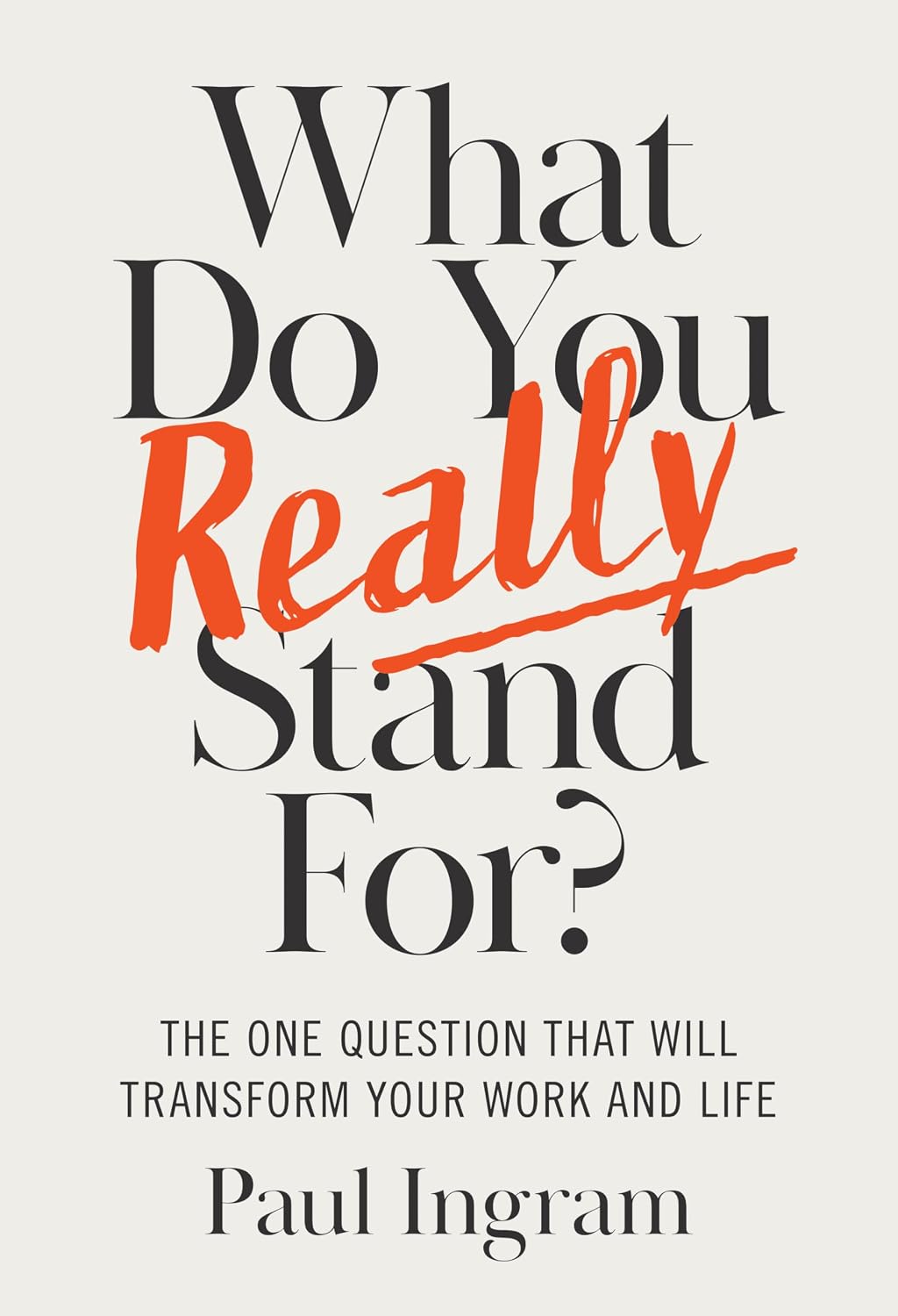
In his new book, Columbia Business School professor Paul Ingram suggests that answering this question – “What Do You Really Stand For?” – is one of the most fundamental leadership questions that any of us can answer for ourselves.
Ingram suggests that our core values serve a vital dual purpose: they act as a compass guiding us toward the right decisions and an engine providing the internal drive to pursue them.
Based on his work with over 10,000 leaders globally, Ingram emphasizes that articulating our values through a structured process transforms abstract ideals into practical tools for everyday leadership.
Relying on vague notions of what matters is rarely sufficient during high-stakes moments. Ingram recommends a structured approach to distill our principles down to a potent list of three to eight essential values:
- Practice Backward Reflection: Examine past professional experiences. Recall a negative situation that caused anger or hurt, and identify the positive value that was missing (e.g., honesty). Next, analyze a deeply satisfying accomplishment to pinpoint which positive values were actively present.
- Use the Laddering Method: Compare a triad of meaningful elements—such as past jobs, relationships, or projects. Ask how two differ from the third, why you prefer one, and repeatedly ask “why” until you uncover the foundational value driving your choice.
- Sharpen Your Wording: Exact terminology makes a difference. Refine your list by testing synonyms (for example, comparing “accomplishment” versus “excellence”) in direct head-to-head choices until you land on the most powerful expression.
Some people like writing down their core values on a card in their wallet or saving it on their phone. Do whatever works for you so that you can quickly remember your core values when you need an immediate boost of confidence or ethical grounding.
In our current environment that rarely slows down or simplifies itself, knowing exactly what you stand for provides the ultimate executive superpower: the clarity to make swift, principled decisions when it matters most.
*Ideas for this blog taken from: Ingram, P. “What Do You Really Stand For?” Harvard Business Review online, April 22, 2026.