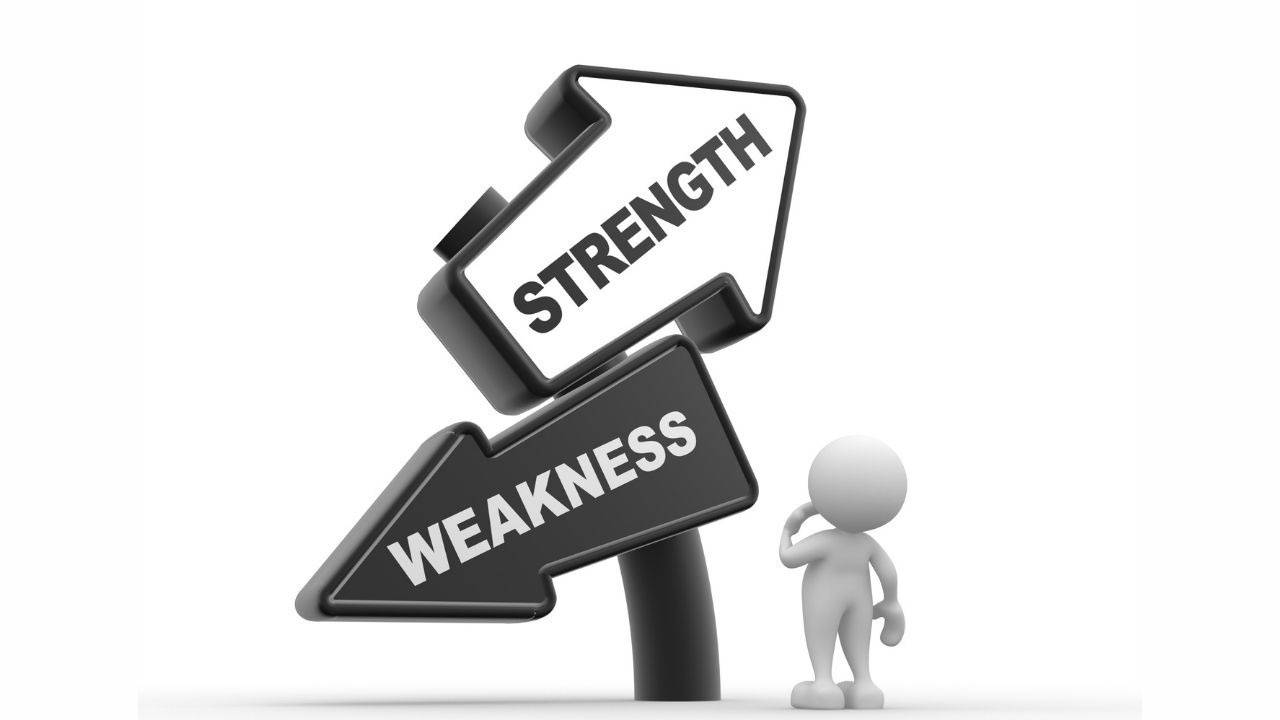
 Once upon a time, people believed that if you could just fix all of your weaknesses – you would be a big success.
The annual performance review was focused on “what do you need to work on?”
These days the “weakness-fixing” era is fading and more people realize that real success is when you can develop your strengths; when you can move from being very good at something to being SuperFantastic.
Unfortunately, some people believe that this means you can ignore your weaknesses. Not so fast, my friend. Ignoring your weaknesses can be a huge career derailer.
So what do you do? Develop your strengths or fix weaknesses?
According to research in the Harvard Business Review, the answer isn’t to pick one approach over the other, but to diagnose what your specific situation requires. Before deciding where to invest your energy, you must work through four diagnostic questions:
1. What does success require in my role? Identify the baseline capabilities needed to perform effectively, which vary significantly by level and function.
2. What are my current capabilities? Rigorously map your strengths and weaknesses against those role requirements.
3. What can be compensated for? Determine which weaknesses can be addressed through team design, delegation, or support systems rather than personal development.
4. Where is my untapped potential? Look for capabilities you haven’t yet discovered because you were busy leveraging existing strengths.
Once you have diagnosed your needs, focus your development efforts on three critical categories:
- Superpowers: These are exceptional strengths that set you apart. Small investments here often produce significant improvements, so you should double down on them.
- Dangerous Derailers: These are unmanaged weaknesses that damage trust, psychological safety, and relationships. Addressing these must take priority over everything else.
- Untapped Potential: These are new capabilities you may need as your business shifts or you move into a role requiring different skills.
Your focus will also be shaped by your career stage. In early to midcareer, you can often succeed mainly by enhancing strengths. However, as you rise to more senior levels, you must address weaknesses that were previously tolerable. For example, a vice president moving to the C-suite must master enterprise strategy even if execution has always been their primary suit.
Ultimately, the debate between building strengths and fixing flaws is solved by judging what you need most in your current context. By mastering this diagnostic framework, you can move past instinctual development and begin to truly move the needle on your professional growth.
*Ideas for this blog taken from: Anderson-Finch, S., Lenniger, K. & Watkins, M. “Should You Develop Your Leadership Strengths – or Fix Your Weaknesses,” Harvard Business Review online, April 15, 2026.